

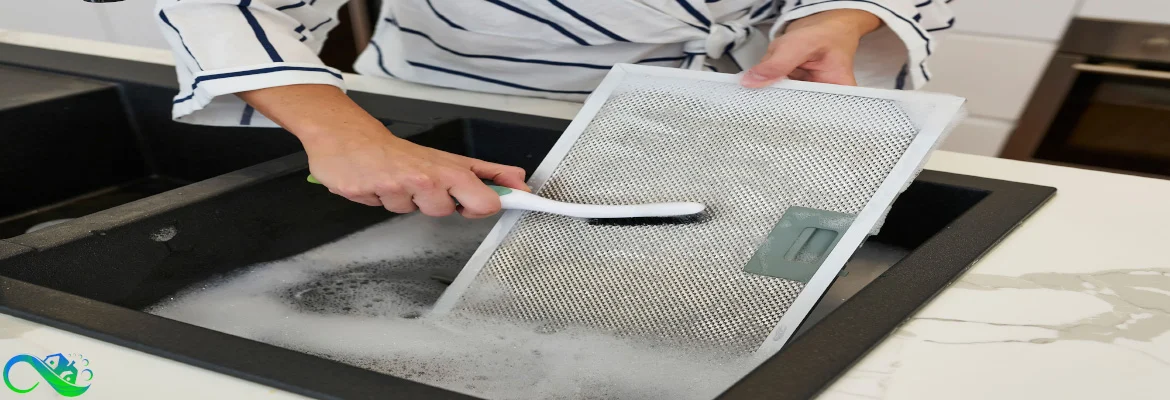
Rangehood filters collect grease, smoke and cooking residue much faster than most people realise, and when they become clogged, your kitchen starts to smell, airflow weakens and the hood becomes noisy or less effective. The good news is that cleaning them doesn’t have to be difficult or time consuming. Whether your filters are lightly dusty or completely covered in stubborn grease, this guide will show you exactly how to clean them quickly, safely and like a professional using simple household items you already have.
What Is the Fastest Way to Clean Greasy Rangehood Filters?
The quickest way to clean greasy rangehood filters is to soak them in boiling water mixed with baking soda and dishwashing liquid for 10–20 minutes. This method helps dissolve built-up grease quickly and safely without damaging the filter mesh.
For heavily clogged filters, adding white vinegar and repeating the soak can deliver even better results.
What You Need Before You Start Cleaning Rangehood?
You don’t need any specialised equipment to clean rangehood filters properly. Most of the items required are already in your kitchen. Gather these before you begin to make the process faster and easier:
- A large pot or deep sink for soaking
- Boiling water
- Baking soda
- Dishwashing liquid
- A soft brush or old toothbrush
- Microfibre cloths for drying
- White vinegar (optional for heavy grease)
Having everything ready ensures a smooth cleaning process and helps the grease break down more effectively.
Signs Your Rangehood Filters Need Cleaning
Many people wait too long before cleaning their rangehood filters. Here are the most common signs your filters are clogged with grease:
- Weak airflow or poor smoke extraction
- Strong cooking smells staying in the kitchen
- Sticky grease around the rangehood
- Excess noise while the fan is running
- Visible yellow or brown grease build-up
- Smoke lingering longer during cooking
If you notice any of these issues, your filters likely need immediate cleaning to restore proper airflow and kitchen hygiene.
How to Clean Rangehood Filters Step-by-Step Like a Professional
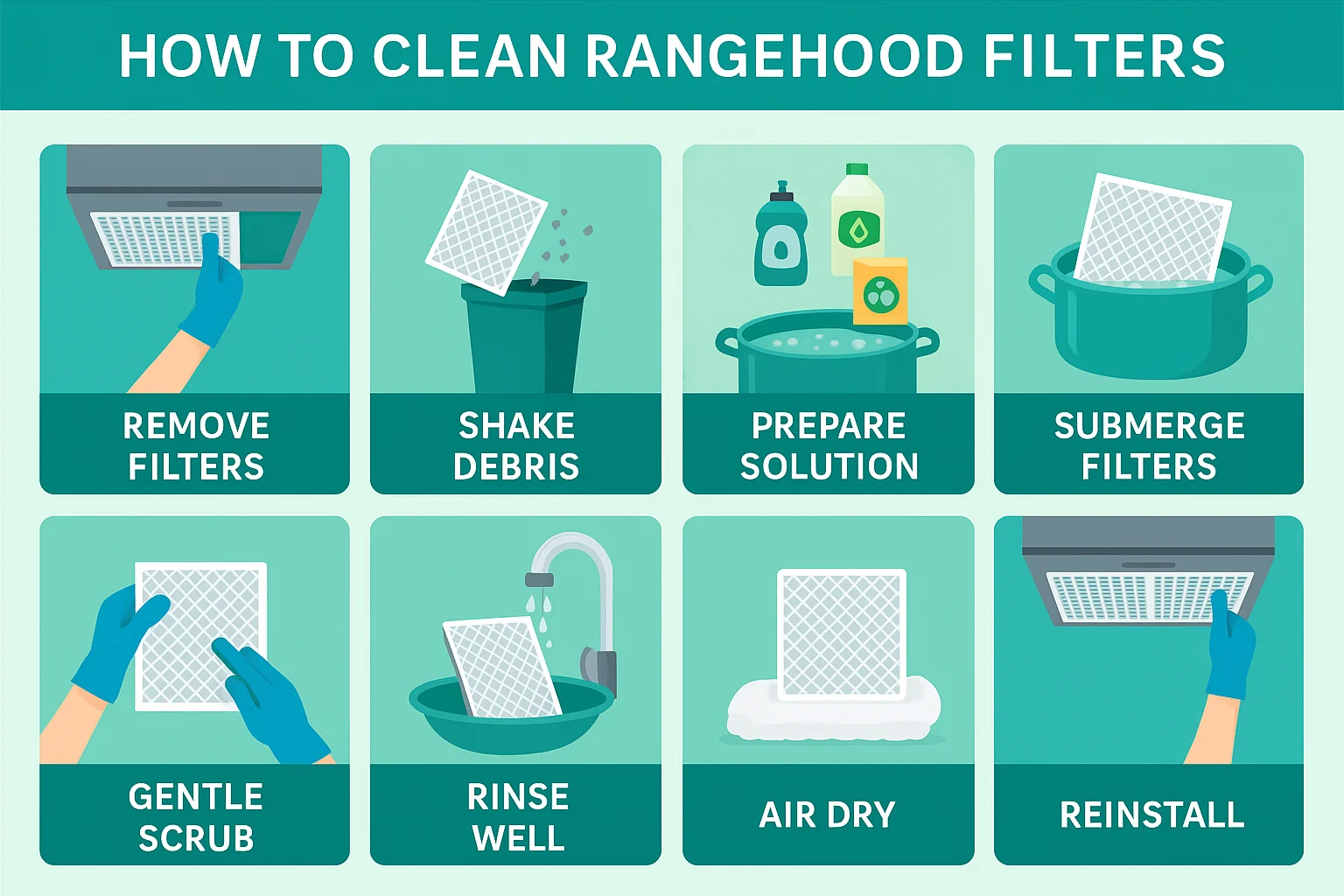
Cleaning rangehood filters properly requires only a few simple steps. Follow this professional method for the best results:
1. Remove the Filters Safely
Turn off the rangehood, allow it to cool and gently slide or unclip the filters. Most filters lift out easily, but avoid forcing them to prevent bending the frame.
2. Shake Off Loose Dust and Debris
Give the filters a light shake or tap over the sink or bin to remove loose particles. This helps the cleaning solution work more effectively.
3. Prepare a Hot Cleaning Solution
Fill a large pot or sink with boiling water. Add a generous amount of baking soda (2–3 tablespoons) and a squeeze of dishwashing liquid. Stir to dissolve.
4. Submerge the Filters Completely
Place the filters into the hot solution. The water should immediately start cutting through grease. Leave them to soak for 10–20 minutes depending on how dirty they are.
5. Scrub Gently to Remove Remaining Grease
Use a soft brush or old toothbrush to clean the mesh. Avoid using abrasive brushes they can damage aluminium filters.
6. Rinse Thoroughly with Hot Water
Rinse away all the loosened grease and cleaning residue. Hot water helps dissolve any remaining oils.
7. Let the Filters Air Dry Completely
Place the filters upright or on a clean towel and allow them to dry fully. Installing them while damp can lead to mould or poor airflow.
8. Reinstall the Filters
Once dry, slot the filters back into the rangehood securely. You should notice improved airflow and reduced kitchen odours immediately.
How to Deep Clean Extremely Greasy Rangehood Filters?
Many people asks A Max Clean Group how to clean greasy range hood filters? If your rangehood filters haven’t been cleaned for months or are coated in thick, sticky grease, a standard soak may not be enough. This deep-cleaning method for greasy rangehood and filter helps break down heavy build-up and restore the filters to near new condition.
1. Create a Stronger Degreasing Solution
Fill your sink with boiling water and add:
- ½ cup baking soda
- ½ cup white vinegar
- A generous squeeze of dishwashing liquid
The combination of baking soda and vinegar creates a natural chemical reaction that helps dissolve stubborn grease.
2. Soak the Filters for 20–30 Minutes
Fully submerge the filters. You’ll notice the water turning cloudy as grease lifts from the mesh.
3. Scrub Using a Soft Brush
After soaking, gently scrub the mesh in circular motions. Focus on areas where grease is visibly trapped. Avoid using steel wool, as it can scratch and damage the metal.
4. Repeat the Soak if Necessary
For extremely oily filters, you may need to repeat the soak with fresh hot water and more baking soda. This step ensures deep penetration through thick layers of grease.
5. Rinse with Very Hot Water
Rinsing with hot water helps melt and remove the loosened grease, revealing a cleaner and clearer mesh pattern.
6. Dry Thoroughly Before Reinstalling
Allow the filters to air dry completely. Any trapped moisture can lead to mould or reduced extraction performance.
This deep-cleaning method is ideal for households that cook frequently, use oily ingredients or haven’t cleaned their rangehood for an extended period.
Read More: NDIS Cleaning Services in Melbourne
How to Clean Filters Using Vinegar, Baking Soda & Other Natural Methods?
If you prefer eco-friendly cleaning methods or want to avoid harsh chemicals, several natural ingredients can effectively break down grease and lift dirt from rangehood filters. These solutions are safe, affordable and easy to use.
1. White Vinegar
A powerful natural degreaser that is used specially for range hood filter degreaser.
Mix equal parts vinegar and hot water, then soak the filters for 10–15 minutes. Vinegar helps dissolve oils and neutralise lingering kitchen odours.
2. Baking Soda
One of the most effective grease-cutting ingredients.
Add 2–4 tablespoons of baking soda to boiling water and stir. It binds with oils, lifts grease and softens tough build-up without damaging the metal.
3. Vinegar + Baking Soda Combo
For maximum cleaning power.
When combined, the fizzing reaction helps break down heavy grease lodged deep in the mesh. Ideal for filters that haven’t been cleaned in a long time.
Read More: How to Clean Your Washing Machine with Vinegar Step by Step
4. Lemon Juice
A natural antibacterial and deodoriser.
Add a few tablespoons to hot water for a fresh scent. Works well for light-to-moderate grease.
5. Dishwashing Liquid
Gentle but extremely effective.
Choose a high-quality degreasing formula. Works best when combined with baking soda in hot water.
These natural solutions not only clean effectively but also help maintain the longevity of your filters by avoiding abrasive chemicals.
| Cleaning Method | Best For | Difficulty | Grease Removal Power |
|---|---|---|---|
| Baking Soda + Hot Water | Regular cleaning | Easy | High |
| Vinegar Soak | Moderate grease | Easy | Medium |
| Dishwasher Cleaning | Light grease | Very Easy | Medium |
| Professional Degreasing | Heavy grease build-up | No effort required | Very High |
Mistakes That Make Rangehood Filters Dirtier
Cleaning rangehood filters is simple when you are doing house cleaning, but a few common mistakes can cause damage or make the cleaning process far less effective. Avoid these pitfalls to ensure the best results every time:
1. Using Abrasive Brushes or Steel Wool
These can scratch aluminium filters and damage the mesh. Once scratched, grease begins building up much faster.
2. Not Using Hot Enough Water
Warm water won’t break down grease properly. The hotter the water (ideally boiling), the more effective your cleaning results will be.
3. Using Bleach or Harsh Chemicals
Strong chemicals can corrode metal filters and produce strong fumes when the rangehood heats up. Natural solutions are safer and just as effective.
4. Reinstalling Filters Before They’re Fully Dry
Trapped moisture can lead to mould, unpleasant smells and reduced airflow. Always let filters air dry completely.
5. Cleaning the Filters Too Infrequently
Waiting too long allows grease to harden and clog the mesh, reducing extraction power and putting strain on the motor. Regular house cleaning prevents damage and keeps your kitchen fresher.
Avoiding these common mistakes will help your rangehood perform better, last longer and stay cleaner between maintenance sessions.
How Often Should You Clean Your Rangehood Filters?
How frequently you should clean your rangehood filters depends on how often and what type of food you cook. Grease, steam and smoke accumulate faster in some households than others, but as a general rule:
Light Cooking (1–2 times per week)
Clean every 2–3 months.
Soups, boiling and simple meals produce minimal grease.
Moderate Cooking (3–5 times per week)
Clean every 4–6 weeks.
Frying occasionally, sautéing and oven use create steady grease build-up.
Heavy or Daily Cooking
Clean every 2–3 weeks.
Regular frying, grilling, or cooking oily foods will clog filters quickly.
Commercial or Large Family Kitchens
Clean every 1–2 weeks for optimal performance and hygiene.
Regular house cleaning helps maintain strong airflow, reduces odours and prevents grease fires. A clean filter also improves the efficiency and lifespan of your rangehood motor.
Can Dirty Rangehood Filters Become a Fire Hazard?
Yes. Over time, grease trapped inside rangehood filters becomes highly flammable, especially in kitchens where frying or high-heat cooking is common.
When grease build-up becomes excessive, heat and cooking flames can increase the risk of fire spreading through the filter and ventilation system.
Regular cleaning helps:
- Reduce fire risk
- Improve kitchen safety
- Maintain proper airflow
- Prevent grease from reaching the motor
This is one reason professional kitchen cleaners recommend cleaning filters regularly rather than waiting until they become heavily clogged.
Read More: NDIS Carpet Cleaning in Melbourne
Professional Kitchen Cleaning: The Best Solution for Tough Grease?
While DIY cleaning works well for regular maintenance, some rangehood filters become so heavily coated in grease that home methods simply aren’t enough. If your filters still feel sticky after soaking, have a burnt smell or haven’t been cleaned for months, it may be time to call in the professionals.
A Max Clean Group provides professional kitchen and rangehood cleaning services across Adelaide, Melbourne and surrounding areas. Our team removes stubborn grease build-up safely and efficiently using professional-grade degreasing methods designed to restore airflow and improve kitchen hygiene.
- Exhaust fans
- Rangehood exteriors
- Kitchen splashbacks
- Cupboards and high-touch surfaces
If DIY methods aren’t giving you the finish you want, professional cleaning ensures your kitchen stays fresh, grease-free and healthy for everyday cooking.
Can You Clean Rangehood Filters in the Dishwasher?
Yes, many aluminium mesh rangehood filters are dishwasher safe. This can be a convenient option for lightly greasy filters.
However, there are a few important things to keep in mind:
- Extremely greasy filters may still need soaking beforehand
- Strong dishwasher detergents can dull aluminium over time
- Filters should be placed upright for better cleaning
- Always check the manufacturer’s instructions first
Dishwasher cleaning works best as regular maintenance rather than for heavy grease build-up.
Frequently Asked Questions (FAQ)
1. What is the quickest way to clean rangehood filters?
The fastest method is soaking the filters in boiling water, baking soda and a small amount of dishwashing liquid. This breaks down grease within minutes and requires minimal scrubbing.
2. Can I put my rangehood filters in the dishwasher?
Yes, most metal mesh filters are dishwasher safe. However, extremely greasy filters may not come out fully clean, and dishwasher detergent can sometimes dull the metal. Always check your manufacturer’s instructions first.
3. Why do my rangehood filters still smell after cleaning?
Lingering odours usually mean grease remains deep inside the mesh. Try a second soak with baking soda and white vinegar, or consider professional kitchen cleaning if the smell persists.
4. How do I know if my filters need replacing instead of cleaning?
If the mesh is damaged, bent, rusted or permanently discoloured, cleaning will no longer restore proper airflow. In these cases, replacing the filter is the safest and most effective solution.
5. Do professionals clean rangehood filters during a kitchen deep clean?
Yes. Professional cleaners such as A Max Clean Group in Adelaide, Melbourne, Darwin and Perth include rangehood filter cleaning, degreasing and full kitchen sanitation as part of their deep cleaning services.
6. Can greasy rangehood filters reduce airflow?
Yes. When grease builds up inside the filter mesh, it blocks proper airflow and makes the rangehood less effective at removing smoke, steam and cooking odours. This can also cause the fan motor to work harder, become noisier and lose efficiency over time.
7. Is baking soda safe for aluminium filters?
Yes, baking soda is generally safe for aluminium rangehood filters when used correctly. It helps break down grease naturally without damaging the mesh. However, avoid using abrasive scrubbing tools such as steel wool, as these can scratch the aluminium surface.
8. What happens if rangehood filters are never cleaned?
If rangehood filters are not cleaned regularly, grease continues building up inside the mesh and restricts airflow. Over time, this can lead to strong kitchen odours, poor ventilation, excess smoke, reduced motor performance and even increased fire risk due to highly flammable grease accumulation.
9. Why is my rangehood still greasy after cleaning?
If your rangehood still feels greasy after cleaning, the grease may be deeply embedded inside the filter mesh. Extremely dirty filters often require multiple soaking cycles using boiling water, baking soda and dishwashing liquid. In severe cases, professional degreasing may be necessary to fully remove hardened grease build-up.
10. How long should I soak greasy filters?
For regular grease build-up, soaking filters for 10–20 minutes is usually enough. For heavily clogged filters, a longer soak of 20–30 minutes with fresh hot water and additional baking soda may be required for the best results.
Conclusion
Keeping your rangehood filters clean is one of the easiest ways to maintain a fresher, healthier and more efficient kitchen. Regular cleaning helps improve airflow, reduce lingering cooking odours and prevent heavy grease build-up that can affect the performance of your rangehood over time. Whether you use a quick baking soda soak or a deeper degreasing method, consistent maintenance can keep your filters working properly and your kitchen feeling cleaner every day.
However, when grease becomes heavily built up or home cleaning methods no longer deliver the results you want, professional cleaning can save you time and restore your rangehood more effectively. A Max Clean Group provides professional kitchen and rangehood cleaning services across Adelaide, Melbourne, Darwin and Perth, using safe and effective degreasing techniques to remove stubborn grease and improve kitchen hygiene.
You can book your cleaning service through our Free Online Booking Form or contact our team directly on +61449540502 for fast and friendly assistance. A cleaner, fresher kitchen starts with properly maintained rangehood filters.



I tried the methods in this article. they were practical and amazing. Thanks.
Thank you for your kind feedback! We’re glad to hear that you found the methods in our article practical and helpful. We appreciate you taking the time to share your experience and hope our tips continue to help you achieve great cleaning results.