
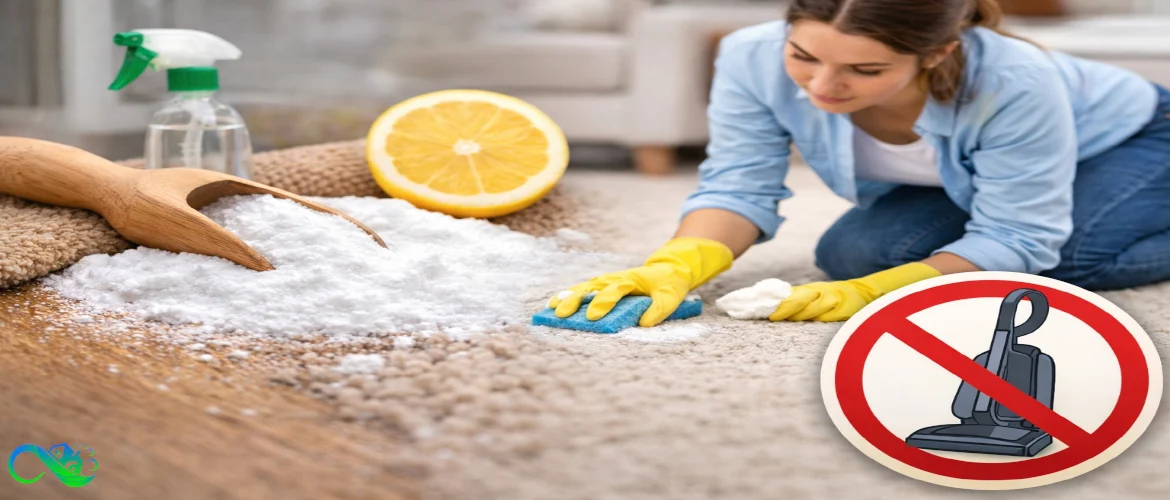
Carpet stains can be a frustrating nuisance, especially when baking soda is involved. Accidental spills or residue left behind after deodorising can make carpets look dull and messy, even after cleaning. While baking soda is widely used to absorb odours and moisture, removing it completely from carpet fibres can be more challenging than expected.
In many situations, using a vacuum cleaner is not an option. You may not have access to one, need a quick solution, or be dealing with a delicate carpet that requires extra care. This is particularly common in rental properties, shared living spaces, or households that rely on professional Carpet Cleaning in Adelaide or Carpet Cleaning in Melbourne for deeper, less frequent cleans.
Knowing how to remove baking soda safely without a vacuum helps prevent residue from being pushed deeper into the fibres and reduces the risk of damage. This is especially important for sensitive carpets in supported living environments, where services such as NDIS Carpet Cleaning in Adelaide, Melbourne or Darwin require gentle, well-considered cleaning methods.
In this guide, you will learn practical, step-by-step techniques to remove baking soda from carpet easily without a vacuum, using simple household tools and proven methods that help restore your carpet’s clean, fresh and well-maintained appearance.
When You Need to Remove Baking Soda from Carpet Without a Vacuum?
- No access to a vacuum cleaner.
- Sensitivity to vacuum noise in certain environments.
- Emergencies where quick cleanup is required.
- Delicate or handmade carpets that shouldn’t be vacuumed.
How to Remove Baking Soda from Carpet Using Vinegar?
This method involves creating a vinegar solution by combining warm water and white vinegar.
Note that you need to apply the process repeatedly until the stain disappears completely, Here is how :
Step-by-Step Vinegar Method to Remove Baking Soda from Carpet
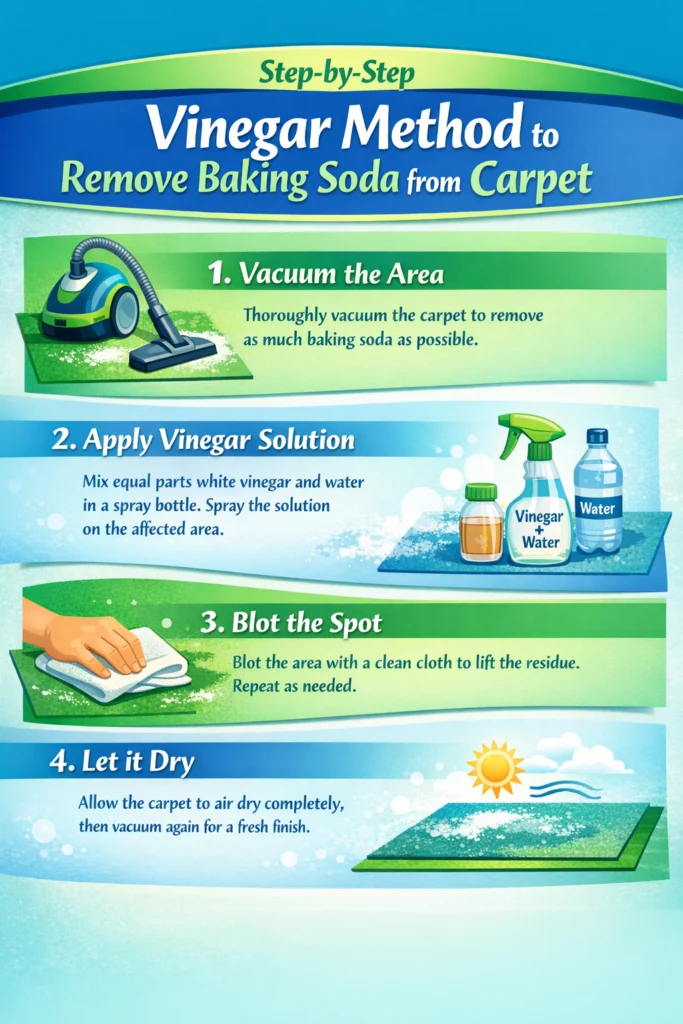
Step 1: In a clean bowl, mix three parts of warm water with one part of white vinegar and ensure that the vinegar and water are well combined by stirring gently with a spoon or whisk.
Step 2: Use the bowl to thoroughly mix the warm water and white vinegar.
Step 3: Take a clean sponge and soak it in the vinegar solution. Squeeze out any excess liquid to avoid oversaturation.
Step 4: Apply gentle pressure while moving the sponge in circular patterns.
Step 5: If the stain persists after the initial application, repeat the previous steps.
Step 6: Once the stain has been successfully removed, rinse the treated area with clean water to remove any residual vinegar solution.
Note that you need to pay attention to the below tips to remove the baking soda from the carpet without a vacuum.
Before applying the vinegar solution, it’s recommended to test it on a small, inconspicuous area of the surface to ensure compatibility and avoid any potential damage or discoloration.
Do you need to end cleaning Adelaide City? Click now.
Additionally, protective gloves should be considered while handling the solution.
How to Remove Baking Soda Residue Using a Steam Cleaner?
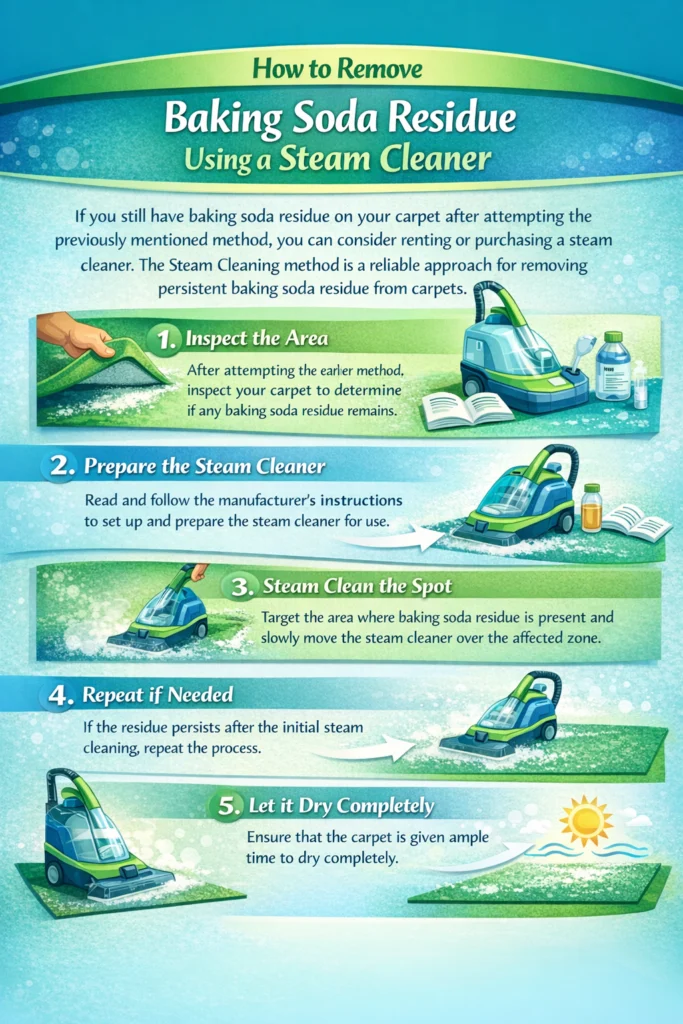
If you still have baking soda residue on your carpet after attempting the previously mentioned method, you can consider renting or purchasing a steam cleaner.
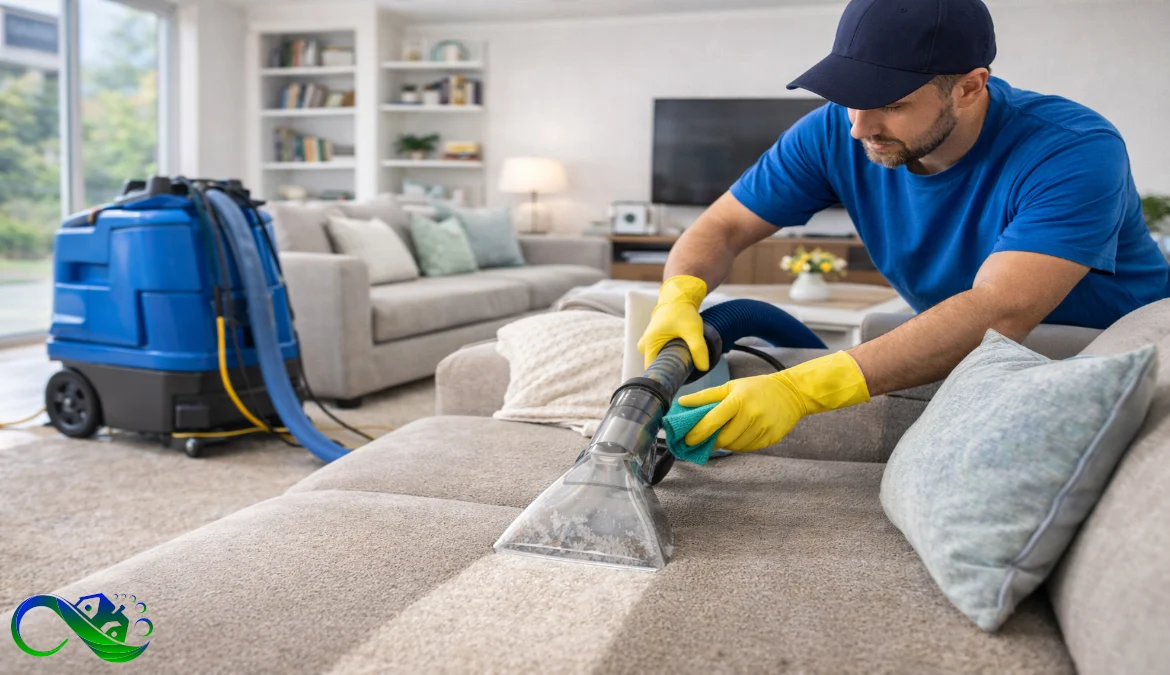
The Steam Cleaning method is a reliable approach for removing persistent baking soda residue from carpets.
Step 1: After attempting the earlier method, inspect your carpet to determine if any baking soda residue remains.
Step 2: Read and follow the manufacturer’s instructions to set up and prepare the steam cleaner for use.
Step 3: Target the area where baking soda residue is present and slowly move the steam cleaner over the affected zone.
Step 4: If the residue persists after the initial steam cleaning, repeat the process.
Step 5: Ensure that the carpet is given ample time to dry completely.
Open windows, use fans, or run the air conditioner to facilitate the drying process. Avoid walking on the damp carpet until it is completely dry.
If you prefer not to use a steam cleaner or are unable to achieve the desired results, you can opt for professional cleaning services that utilize hot water extraction.
To remove the baking soda from the carpet without a vacuum, you can always contact a reputable carpet cleaning company that offers this service and schedule an appointment.
The professionals will use specialized equipment to apply hot water under pressure, effectively extracting the residue and leaving your carpet fresh and clean.
How to Remove Baking Soda from Carpet Using Lemon Juice?
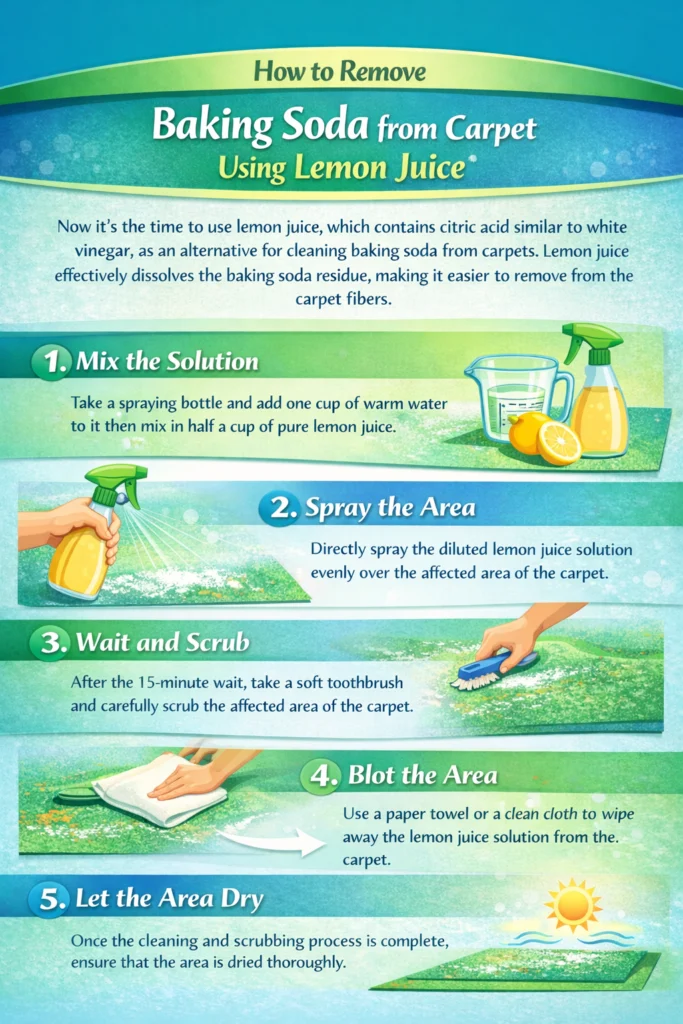
Now it’s the time to use lemon juice, which contains citric acid similar to white vinegar, as an alternative for cleaning baking soda from carpets.
Lemon juice effectively dissolves the baking soda residue, making it easier to remove from the carpet fibers.
Step 1: Take a spraying bottle and add one cup of warm water to it then mix in half a cup of pure lemon juice.
Step 2: Directly spray the diluted lemon juice solution evenly over the affected area of the carpet.
Step 3: After the 15-minute wait, take a soft toothbrush and carefully scrub the affected area of the carpet.
Step 4: Use a paper towel or a clean cloth to wipe away the lemon juice solution from the carpet.
Step 5: Once the cleaning and scrubbing process is complete, ensure that the area is dried thoroughly.
Note that you need to avoid exposing the carpet to direct sunlight during the drying process to prevent color fading, then you can remove the baking soda from the carpet without a vacuum.
By leaving the baking soda on the rug for a slightly longer duration, it can effectively absorb additional odors, dirt, and oil, resulting in a more thorough cleaning.
So when using baking soda for carpet cleaning, it is important to allow it to remain undisturbed for a minimum of 15 minutes.
How to Remove Baking Soda from Carpet Using Mild Detergent?
Taking advantage of this method requires using a mild detergent to effectively remove baking soda from a carpet.
A gentle dishwashing liquid or any mild, non-abrasive liquid detergent can be used for this purpose.
Step 1: In a spraying bottle, combine warm water with 5-7 drops of mild liquid detergent, then shake it.
Step 2: Spray an adequate amount of the detergent solution onto the baking soda.
Step 3: After the 5-minute wait, take a soft toothbrush and gently rub the affected area in circular motions.
Step 4: Remove excess water using a towel.
Step 5: Repeat the previous steps, then dry the area, and this is how to remove the baking soda from the carpet without a vacuum, using detergent.
The Detergent Solution method provides an effective way to remove baking soda from carpets, especially for fresh spills.
While it may not be suitable for old stains, it ensures the removal of baking soda residue, leaving your carpet clean and fresh.
By using a mild detergent, such as dishwashing liquid or a non-abrasive liquid detergent, you can effectively break down and remove baking soda residue.
How to Remove Baking Soda from Carpet Using Mild Detergent?
Here are step-by-step methods to effectively clean baking soda from your carpet without using a vacuum.
-
Using a Soft-Bristled Brush and Dustpan
This method works well for loose baking soda that hasn’t been embedded deeply.
Steps:
- Loosen the Baking Soda
Gently brush the carpet surface with a soft-bristled brush in one direction to gather the baking soda. - Sweep into a Dustpan
Use the brush to sweep the loosened baking soda into a dustpan. - Repeat as Needed
Continue brushing and collecting until the majority of the powder is removed.
Pro Tip:
Brush lightly to avoid pushing the baking soda deeper into the fibers.
-
Damp Cloth or Sponge Technique
If the baking soda has been sprinkled over a small area, this method is highly effective.
Steps:
- Dampen a Cloth or Sponge
Moisten a cloth or sponge with water. It should be damp, not soaking wet. - Blot the Carpet
Press the damp cloth onto the baking soda, allowing it to stick to the fabric. Lift and rinse the cloth as needed. - Wipe the Area
Use gentle, wiping motions to collect the remaining baking soda. - Dry the Carpet
Pat the cleaned area dry with a clean towel.
Pro Tip:
Avoid scrubbing, as this can embed the baking soda further into the carpet.
-
Sticky Tape Method
For small areas, sticky tape can effectively lift baking soda particles.
Steps:
- Choose a Strong Adhesive Tape
Duct tape or packing tape works best. - Press the Tape onto the Carpet
Lay a strip of tape over the baking soda, pressing it firmly to adhere to the particles. - Peel Away
Quickly peel off the tape to lift the baking soda. Repeat with fresh tape as needed.
Pro Tip:
This method is ideal for spot-cleaning specific areas.
-
Spray Bottle and Blotting Technique
This method is great for damp baking soda that has been used for stain removal or deodorizing.
Steps:
- Lightly Spray the Area
Fill a spray bottle with water and mist the area where baking soda is present. - Blot with a Cloth
Use a clean, dry cloth to blot the area, lifting the damp baking soda. - Repeat as Necessary
Continue spraying and blotting until the baking soda is gone. - Dry the Carpet
Place a dry towel over the cleaned area to absorb excess moisture.
Pro Tip:
Avoid oversaturating the carpet to prevent water damage.
-
Carpet Beater or Shaking Method
This method is perfect for removable rugs or carpets.
Steps:
- Take the Carpet Outdoors
Shake the carpet vigorously to dislodge the baking soda. - Beat the Carpet
Use a carpet beater or stick to hit the back of the carpet, further loosening the powder. - Brush the Surface
Finish by brushing away any remaining baking soda.
Pro Tip:
Perform this method in an open area to avoid creating a mess indoors.
How to Prevent Baking Soda Build-Up in Carpets?
To avoid dealing with stuck baking soda in the future, consider these preventative measures:
-
Use Baking Soda Sparingly
A light sprinkle is sufficient for most cleaning tasks.
-
Combine with Moisture Properly
Avoid spreading baking soda when the carpet is damp unless you plan to clean it thoroughly afterward.
-
Invest in Hand Tools
Hand-held carpet sweepers or brushes can help with quick, dry clean-ups.
Why Baking Soda Gets Stuck Deep in Carpet Fibres?
Baking soda is made up of extremely fine, lightweight particles that easily sink into carpet fibres rather than staying on the surface. When sprinkled onto a carpet, the powder settles between the fibres and bonds with moisture, oils and odours trapped deep within the pile. This is exactly why baking soda is so effective for deodorising carpets, but also why it can be difficult to remove completely.
Carpet construction also plays a major role. Thicker carpets, high-pile rugs and carpets with dense fibres allow baking soda to fall deeper, making surface cleaning ineffective. Walking on the carpet or applying pressure after sprinkling baking soda can push the powder even further down, increasing the chance of residue being left behind.
Humidity and moisture can worsen the issue. When baking soda absorbs moisture, it can clump together and adhere to carpet fibres, forming a stubborn residue that is harder to lift without the right technique. This is why improper cleaning methods, such as rubbing or over-wetting the area, often make the problem worse instead of better.
Understanding how and why baking soda becomes embedded in carpet fibres helps you choose the safest and most effective removal method, especially when cleaning without a vacuum and aiming to protect your carpet’s condition and appearance.
What to Do After Removing Baking Soda from Carpet?
Once you’ve removed the baking soda, a quick clean-up ensures your carpet stays in top condition.
Optional Cleaning Steps:
- Spot Cleaning
If stains remain, use a carpet-friendly cleaning solution to treat them. - Odor Neutralization
Sprinkle a small amount of cornstarch or talcum powder, let it sit, and then repeat a removal method. - Ensure Proper Drying
Use fans or open windows to dry damp spots thoroughly.
Common Mistakes to Avoid When Removing Baking Soda from Carpet:
When removing baking soda from carpet, using the wrong technique can make the problem worse instead of solving it. Avoid these common mistakes to ensure effective cleaning and protect your carpet fibres.
Scrubbing Too Hard
One of the most common mistakes is aggressive scrubbing. Applying too much pressure forces baking soda deeper into the carpet fibres, making it harder to remove and increasing the risk of fibre damage. Always use gentle motions to lift the residue rather than pushing it further down.
Overwetting the Carpet
Using excessive water can cause baking soda to clump and spread, while also creating the perfect environment for mould growth and water damage. Carpets should be lightly dampened, never soaked, especially when cleaning without professional equipment.
Ignoring Baking Soda Residue
Leaving behind even small amounts of baking soda can attract dirt over time, causing the carpet to look dull and dirty again. Properly removing all residue is essential to maintain a clean appearance and prevent rapid re-soiling.
By avoiding these mistakes and using controlled, carpet-safe techniques, you can remove baking soda more effectively while preserving the look, hygiene and lifespan of your carpet.
Frequently Asked Questions About Removing Baking Soda from Carpet
1. Can baking soda damage carpet fibres if it is not removed properly?
Baking soda itself is generally safe for carpets, but if it is left behind or pushed deep into the fibres, it can attract dirt and moisture over time. This may cause the carpet to look dull and feel gritty. Proper removal is essential, especially for households that rely on professional Carpet Cleaning in Adelaide or Melbourne to maintain long-term carpet condition.
2. How long should baking soda stay on the carpet before removal?
For light deodorising, baking soda should remain on the carpet for at least 15 minutes. For stronger odours, it can be left for several hours or overnight. However, the longer it stays, the more important it becomes to remove it carefully to avoid residue becoming embedded in the fibres.
3. Is it safe to remove baking soda from carpet without using a vacuum?
Yes, it is safe when the correct methods are used. Techniques such as gentle brushing, blotting with a damp cloth, or using mild cleaning solutions can effectively remove baking soda without damaging the carpet. These methods are commonly used in sensitive environments, including homes supported by NDIS Carpet Cleaning in Darwin, Melbourne or Adelaide.
4. What should I do if baking soda residue still remains after cleaning?
If residue remains after vacuum-free methods, professional cleaning may be the best option. Expert cleaners use specialised equipment to lift deeply embedded particles safely. Booking a professional Carpet Cleaning service in Melbourne or Adelaide ensures thorough removal without risking carpet damage.
5. Can professional cleaners remove baking soda from carpets in NDIS-supported homes?
Yes, professional services experienced in NDIS Carpet Cleaning in Adelaide, Melbourne and Darwin use gentle, carpet-safe techniques tailored to supported living environments. This ensures effective cleaning while maintaining hygiene, safety and comfort for participants.
Why Choose A Max Clean Group for Professional Carpet Cleaning?
Removing baking soda from carpets without a vacuum can work in some cases, but stubborn residue, deep carpet fibres and sensitive materials often require professional care. This is where A Max Clean Group truly makes the difference, delivering reliable, carpet-safe results you can trust.
Our experienced carpet cleaning specialists use professional-grade equipment and proven techniques to safely remove baking soda residue, stains and trapped odours without damaging carpet fibres. Whether it’s a residential home, rental property or high-traffic area, we carefully tailor our cleaning approach based on carpet type, condition and usage.
We proudly provide trusted Carpet Cleaning services in Adelaide and Melbourne, helping households maintain clean, hygienic and well-cared-for carpets. In addition, we offer specialised NDIS Carpet Cleaning in Melbourne, Adelaide and Darwin, designed to support participants and supported living environments with gentle, safe and consistent cleaning solutions that prioritise comfort and wellbeing.
Using eco-friendly products, trained technicians and a strong commitment to customer satisfaction, we ensure every clean meets professional standards while respecting individual needs. From routine maintenance to deep carpet cleaning, our services deliver lasting freshness and peace of mind.
If home methods don’t deliver the result you’re looking for, A Max Clean Group is ready to help with professional carpet cleaning care you can rely on every step of the way.
Conclusion
Removing baking soda from carpet without a vacuum can be simple and effective when the right techniques are used. By carefully applying methods such as vinegar solutions, lemon juice, mild detergent or controlled moisture, you can lift baking soda residue without damaging delicate carpet fibres and restore a fresh, clean appearance to your space.
However, when baking soda becomes deeply embedded or you want a flawless, stress-free result, professional cleaning makes all the difference. A Max Clean Group provides reliable and high-quality carpet and house cleaning services across Adelaide and Melbourne, using safe, proven methods to remove residue, stains and trapped odours with care and precision.
You can book your service instantly through our Free Online Booking Form, or call us directly on +61449540502 for fast and friendly support.
Enjoy a cleaner, fresher carpet without the effort. Let A Max Clean Group handle the hard work, so you can relax in a home that feels clean, comfortable and well cared for.