

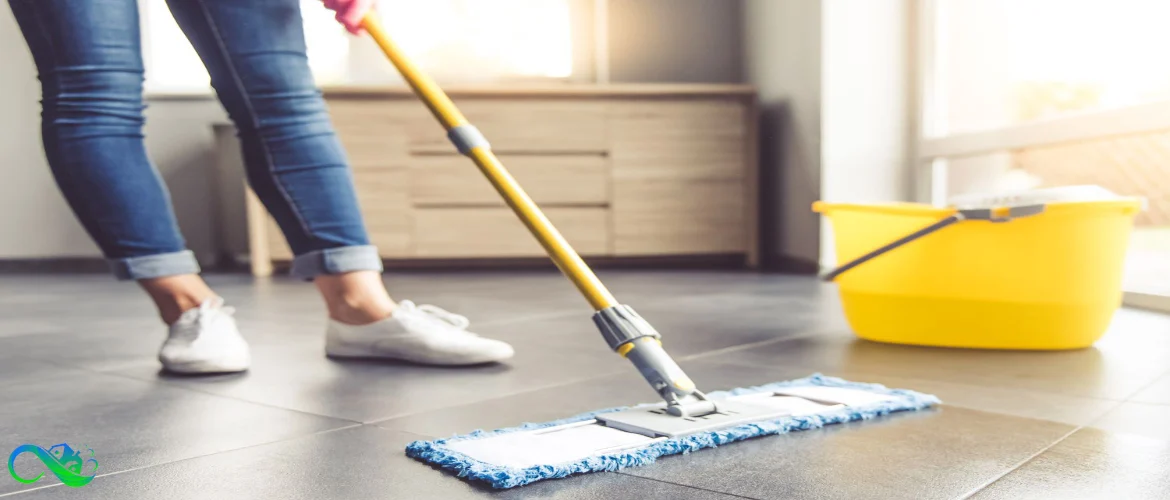
Mopping the floor may seem like one of the easiest household chores, but many people unknowingly make mistakes that leave floors streaky, sticky or even damaged. Using too much water, choosing the wrong cleaning product or skipping important preparation steps can spread dirt instead of removing it and shorten the lifespan of your flooring.
If you’ve ever wondered how to mop the floor properly, you’re not alone. Whether you want to learn how to mop a floor for the first time or improve your current cleaning routine, using the right technique can make a noticeable difference. Proper mopping not only leaves your floors looking cleaner but also helps create a healthier home by removing dust, bacteria and everyday grime more effectively.
In this complete guide, you’ll discover how to mop properly using simple step-by-step methods, the best cleaning solutions for different floor types, common mistakes to avoid and expert tips for achieving streak-free results. We’ll also explain how professional house cleaning services can help maintain spotless floors when you need a deeper, more consistent clean.
Key Takeaways
- Mopping the floor properly starts before the mop touches the floor. Always sweep or vacuum first to remove dust, dirt and debris.
- Use the right cleaning solution for your specific floor type, as the wrong product can leave residue or damage the surface.
- A damp mop is more effective than a soaking wet one. Excess water can damage wooden, laminate and vinyl floors.
- The best way to mop floors is to work in small sections, rinse the mop regularly and change dirty water when needed.
- Different flooring materials require different cleaning techniques. Tile, hardwood, laminate, vinyl and natural stone floors should not all be cleaned the same way.
- Avoid common mistakes such as using dirty mop water, too much cleaning solution or walking on the floor before it has completely dried.
- If you’re unsure how to mop the floor correctly or want consistently spotless results, professional house cleaning services can help protect your floors while saving you time and effort.
Why Proper Mopping Matters
Many people think that mopping the floor is simply a matter of dipping a mop into a bucket and wiping the surface. In reality, using the wrong technique can leave dirt behind, create streaks, spread bacteria and even damage certain types of flooring over time. Learning how to mop properly helps protect your floors while keeping your home cleaner and healthier.
Proper mopping removes fine dust, allergens, bacteria and everyday grime that sweeping or vacuuming alone cannot eliminate. It also helps preserve the appearance of your flooring by preventing dirt and abrasive particles from scratching the surface during cleaning.
Whether you’re cleaning ceramic tiles, hardwood, laminate or vinyl flooring, using the correct method reduces excess moisture, prevents residue build-up and delivers a more even, streak-free finish. This is especially important in high-traffic areas such as kitchens, hallways and entryways, where dirt and germs accumulate quickly.
Knowing how to mop the floor correctly also saves time and effort. Instead of repeatedly cleaning the same area because of streaks or sticky residue, you’ll achieve better results the first time with the right preparation, suitable cleaning products and proper mopping technique.
For homeowners who want consistently spotless floors without the hassle, combining the correct mopping method with regular professional house cleaning is one of the most effective ways to maintain a cleaner, healthier and longer-lasting home environment.
What You’ll Need Before Mopping the Floor
Using the right tools is just as important as using the correct technique. Before you mop the floor, make sure you have everything you need to clean efficiently and avoid damaging your flooring. The right equipment will help remove dirt more effectively, reduce streaks and make the entire process quicker and easier.
Microfibre Mop
A high-quality microfibre mop is one of the best choices for most floor types. It captures dust, dirt and bacteria more effectively than traditional string mops while using less water, making it suitable for tile, laminate, vinyl and hardwood floors.
Bucket with Warm Water
Fill a clean bucket with warm water rather than hot water. Warm water helps loosen dirt and grime without damaging sensitive flooring materials or reducing the effectiveness of certain cleaning solutions.
Floor-Safe Cleaning Solution
Always choose a cleaning product that is recommended for your specific flooring. Different surfaces require different cleaners, and using the wrong solution may leave residue, dull the finish or cause long-term damage. If you’re unsure how to mop a floor safely, start with a pH-neutral floor cleaner designed for your flooring type.
Vacuum Cleaner or Broom
Never skip this step. Before mopping the floor, remove loose dust, pet hair and debris by sweeping or vacuuming thoroughly. This prevents dirt from being pushed around the floor during mopping and helps achieve a cleaner, streak-free finish.
Clean Water for Rinsing
If you’re cleaning a large area, replace the dirty water whenever it becomes cloudy. Using clean water throughout the process is one of the simplest ways to mop properly and avoid spreading dirt across the floor.
Dry Microfibre Cloth or Towel
Keep a dry microfibre cloth or towel nearby to remove excess moisture if needed. This is particularly useful for timber, laminate and vinyl floors, where standing water can lead to swelling, staining or permanent damage.
Having these tools ready before you begin makes the cleaning process more efficient and helps you achieve professional-looking results every time you mop your floors.
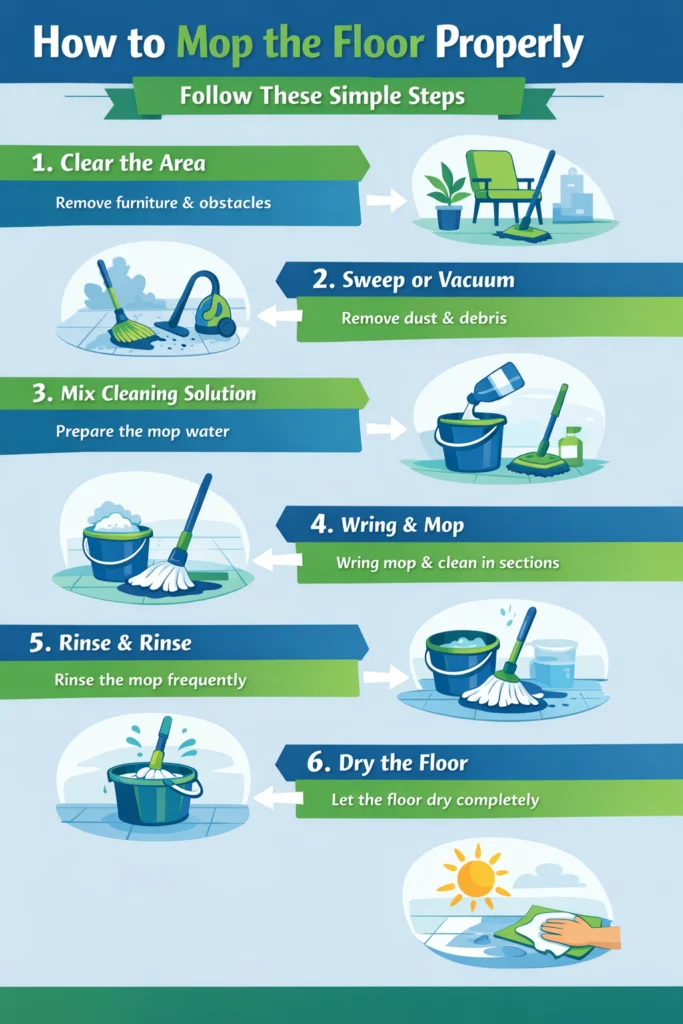
How to Mop the Floor Properly: Step-by-Step Guide
If you’re wondering how to mop the floor properly, following a structured cleaning process will give you better results while protecting your flooring from unnecessary wear. These simple steps are suitable for most homes and can be adapted for different floor types.
Step 1: Remove Furniture and Clear the Area
Before you begin, move lightweight furniture, rugs and other obstacles out of the way. A clear workspace allows you to clean every section of the floor without missing hidden areas where dust and dirt often collect.
Step 2: Sweep or Vacuum Thoroughly
One of the biggest mistakes people make is mopping the floor before removing loose debris. Always sweep or vacuum first to pick up dust, pet hair, crumbs and grit. This prevents dirt from turning into muddy streaks when you start mopping and reduces the risk of scratching your floors.
Step 3: Prepare the Correct Cleaning Solution
Fill your bucket with warm water and add the recommended amount of floor cleaner according to the manufacturer’s instructions. Avoid using too much detergent, as excess cleaning solution can leave a sticky residue that attracts more dirt over time.
Step 4: Dip and Wring the Mop
Dip the mop into the cleaning solution and wring it thoroughly until it is damp rather than soaking wet. This is especially important for hardwood, laminate and vinyl flooring, where too much moisture can cause swelling or permanent damage.
Step 5: Mop in Small Sections
Start in the corner furthest from the exit and work your way towards the door. Mop one small section at a time using smooth, overlapping strokes. This method ensures every area is cleaned evenly and helps you mop the floor more efficiently without walking over freshly cleaned surfaces.
Step 6: Rinse the Mop Regularly
As you clean, rinse the mop frequently and replace the water whenever it becomes dirty. Using clean water throughout the process is one of the easiest ways to mop properly, preventing dirt and bacteria from being spread across the floor.
Step 7: Allow the Floor to Dry Completely
After finishing, allow the floor to air dry before walking on it. If necessary, use a clean, dry microfibre cloth to remove excess moisture, particularly on timber, laminate or other moisture-sensitive flooring. Waiting until the floor is fully dry helps prevent streaks, footprints and accidental slips.
By following these steps every time you mop a floor, you’ll achieve cleaner, streak-free results while extending the life of your flooring. Consistent cleaning using the correct technique not only improves the appearance of your home but also creates a healthier living environment for your family.
How to Mop Different Types of Floors
Not all floors should be cleaned the same way. While the basic floor mopping process is similar, the amount of water, type of cleaning solution and mopping technique should be adjusted to suit your flooring. Using the correct method helps protect the surface, extend its lifespan and achieve the best possible cleaning results.
How to Mop Tile Floors
Tile and ceramic floors are among the easiest surfaces to clean because they are highly resistant to moisture.
For the best results:
- Sweep or vacuum before mopping.
- Use warm water with a pH-neutral or mild floor cleaner.
- Mop using overlapping strokes to avoid missed areas.
- Rinse the mop frequently to prevent spreading dirt.
- Allow the floor to air dry or wipe away excess moisture if necessary.
Although tile floors tolerate more water than other surfaces, avoiding overly dirty mop water will leave a cleaner, streak-free finish.
How to Mop Hardwood Floors
Hardwood floors require extra care because excessive moisture can damage the wood and affect its finish.
When cleaning hardwood floors:
- Always use a well-wrung, damp microfibre mop.
- Choose a cleaner specifically designed for hardwood flooring.
- Never pour water directly onto the floor.
- Wipe up any excess moisture immediately.
- Allow the floor to dry completely before walking on it.
Using less water is one of the most important steps if you’re learning how to mop a floor made from natural timber.
How to Mop Laminate Floors
Laminate flooring is durable but sensitive to standing water. Too much moisture can seep into the joints and cause swelling over time.
For safe laminate floor cleaning:
- Vacuum thoroughly before mopping.
- Use only a lightly damp microfibre mop.
- Apply a laminate-safe cleaning solution.
- Avoid steam mops unless recommended by the flooring manufacturer.
- Dry any remaining moisture with a clean cloth if needed.
How to Mop Vinyl Floors
Vinyl flooring is easy to maintain and responds well to regular cleaning.
To keep vinyl floors looking their best:
- Remove loose dirt before mopping.
- Use warm water with a gentle floor cleaner.
- Avoid abrasive scrubbers or harsh chemicals.
- Mop using smooth, even strokes.
- Let the floor dry naturally before replacing furniture or rugs.
Regular mopping the floor using the correct products helps preserve the appearance of vinyl flooring and prevents residue build-up.
How to Mop Natural Stone and Marble Floors
Natural stone and marble require specialised care because acidic or harsh cleaning products can permanently damage the surface.
To clean stone floors safely:
- Use only pH-neutral cleaners designed for natural stone.
- Avoid vinegar, bleach or acidic household cleaners.
- Mop with a damp microfibre mop rather than a soaking wet one.
- Dry the floor after cleaning to minimise water spots.
- Consider resealing the stone periodically according to the manufacturer’s recommendations.
Using the right cleaning method for each flooring material ensures better results while preventing unnecessary wear and costly repairs. Whether you’re cleaning tile, timber, laminate, vinyl or natural stone, adapting your mopping technique to the floor type is the best way to keep your home looking clean and well maintained.
Best Cleaning Solutions for Different Floor Types
Choosing the right cleaning solution is just as important as learning how to mop the floor correctly. While many all-purpose cleaners claim to work on every surface, using the wrong product can leave sticky residue, dull the finish or even damage your flooring over time. Matching the cleaner to your floor type helps achieve better results while protecting your investment.
| Floor Type | Recommended Cleaner | Avoid |
|---|---|---|
| Tile & Ceramic | pH-neutral floor cleaner or mild detergent | Excessive bleach or abrasive cleaners |
| Hardwood | Hardwood floor cleaner | Excess water, vinegar, ammonia |
| Laminate | Laminate-specific cleaner | Steam cleaners, soaking wet mops |
| Vinyl | Mild pH-neutral cleaner | Solvents and abrasive chemicals |
| Natural Stone & Marble | Stone-safe pH-neutral cleaner | Vinegar, lemon juice, bleach and acidic cleaners |
Tile and Ceramic Floors
Tile floors are durable and easy to maintain. A mild detergent or pH-neutral floor cleaner is usually all that’s needed to remove everyday dirt and grime. Avoid using excessive amounts of soap, as this can leave a slippery residue and reduce the shine of the tiles.
Hardwood Floors
Hardwood flooring requires specially formulated wood floor cleaners that protect the finish while removing dirt effectively. Avoid harsh chemicals, ammonia-based products and excessive water, as these can cause discolouration, swelling or permanent damage to the timber.
Laminate Floors
Laminate floors should be cleaned with products specifically designed for laminate surfaces. These cleaners evaporate quickly and help prevent moisture from penetrating the joints. If you’re learning how to mop properly, using the correct laminate cleaner is one of the easiest ways to extend the life of your flooring.
Vinyl Floors
Vinyl flooring responds well to gentle, non-abrasive cleaners. A pH-neutral solution removes dirt without damaging the protective wear layer, helping the floor retain its appearance for years with regular maintenance.
Natural Stone and Marble Floors
Natural stone requires extra care because it is sensitive to acidic substances. Always use a cleaner specifically formulated for stone surfaces. Products containing vinegar, lemon juice or bleach can etch the surface, leaving permanent marks and reducing the natural beauty of the stone.
Should You Use Homemade Floor Cleaning Solutions?
Many DIY cleaning mixtures recommend ingredients such as vinegar, baking soda or dish soap. While these may work on certain surfaces, they are not suitable for every type of flooring. Acidic solutions can damage natural stone and some hardwood finishes, while excessive soap may leave sticky residue that attracts more dirt.
When in doubt, always follow your flooring manufacturer’s cleaning recommendations or use a high-quality pH-neutral floor cleaner. Using the correct cleaning solution alongside the proper mopping technique is the safest way to keep your floors clean, streak-free and protected for the long term.
Common Mopping Mistakes to Avoid
Even if you know how to mop the floor, a few common mistakes can reduce cleaning effectiveness or even damage your flooring. Avoiding these errors will help you achieve cleaner, streak-free floors while extending the life of your surfaces.
Using Too Much Water
One of the most common mistakes when mopping the floor is using a mop that is soaking wet. While tile floors can tolerate more moisture, hardwood, laminate and vinyl flooring can absorb excess water, leading to swelling, warping or permanent damage.
For the best results, always wring your mop thoroughly so it is damp rather than dripping.
Skipping Vacuuming or Sweeping First
Many people start mopping without removing loose dust and debris. This simply pushes dirt around the floor instead of cleaning it.
Before you mop the floor, always vacuum or sweep thoroughly to remove:
- Dust
- Pet hair
- Sand and grit
- Food crumbs
- Loose debris
This simple step helps prevent scratches and produces a much cleaner finish.
Using the Wrong Cleaning Product
Not every floor cleaner is suitable for every surface. Using harsh chemicals, bleach or acidic cleaners on sensitive flooring can dull finishes, leave residue or permanently damage natural materials.
Always choose a cleaner designed specifically for your floor type and follow the manufacturer’s recommended dilution instructions.
Reusing Dirty Mop Water
Dirty water quickly becomes filled with dust, grease and bacteria. Continuing to clean with cloudy water simply spreads contaminants across the floor instead of removing them.
If you’re cleaning a large area, replace the water whenever it becomes dirty. Fresh water is one of the easiest ways to mop properly and achieve noticeably better results.
Using Too Much Cleaning Solution
Adding extra detergent doesn’t make floors cleaner. In fact, excessive cleaning solution often leaves behind a sticky film that attracts dust and causes streaks.
Using the correct amount of cleaner will leave your floors cleaner, shinier and easier to maintain.
Walking on the Floor Before It Dries
Walking across freshly mopped floors can leave footprints, create streaks and increase the risk of slipping.
Allow the floor to dry completely before replacing furniture, laying down rugs or walking across the surface. This helps preserve the clean finish and keeps your home safer.
Forgetting to Clean the Mop
A dirty mop cannot produce clean floors. Mop heads collect bacteria, grease and dirt after every use, so they should be washed thoroughly and allowed to dry before being stored.
Replacing or washing your microfibre mop regularly ensures every cleaning session is hygienic and effective.
By avoiding these common mistakes, you’ll not only improve the appearance of your floors but also make mopping the floor faster, safer and more effective. Small changes in your cleaning routine can make a significant difference to both the cleanliness and longevity of your flooring.
How Often Should You Mop Your Floors?
One of the most common questions homeowners ask is how often should you mop your floors? The answer depends on several factors, including the type of flooring, the number of people in your household, whether you have children or pets and how much daily foot traffic your home receives.
As a general rule, regular mopping helps prevent dirt, bacteria and allergens from building up, making it easier to maintain a clean and healthy home.
| Area of the Home | Recommended Mopping Frequency |
|---|---|
| Kitchen | 1–2 times per week |
| Bathroom | 1–2 times per week |
| Hallways & Entryways | Once a week or more if heavily used |
| Living Room | Once a week |
| Bedrooms | Every 2–4 weeks |
| Homes with Pets or Young Children | 2–3 times per week in high-traffic areas |
Kitchens and Bathrooms
Kitchens and bathrooms collect moisture, grease, food particles and bacteria more quickly than other areas of the home. Regular mopping the floor in these rooms helps maintain hygiene and reduces the risk of unpleasant odours or slippery surfaces.
High-Traffic Areas
Entryways, hallways and family rooms experience constant foot traffic, meaning dirt is carried inside every day. Mopping these areas at least once a week or more frequently if needed helps prevent grime from becoming embedded in the flooring.
Bedrooms
Bedrooms generally stay cleaner because they experience less daily traffic. In most homes, mopping every two to four weeks is sufficient, although households with pets or allergy sufferers may benefit from more frequent cleaning.
Homes with Pets
Pet hair, muddy paw prints and everyday messes can quickly accumulate on hard floors. If you have dogs or cats, mopping the floor two or three times a week in busy areas can help control dirt, allergens and bacteria while keeping your home looking its best.
When Should You Mop More Frequently?
You may need to mop the floor more often if:
- Someone in your household has allergies or asthma.
- You have young children who spend time playing on the floor.
- Pets regularly track dirt or mud into the house.
- You frequently entertain guests.
- There has been a spill, renovation or unusually dirty weather.
Keeping up with a regular mopping routine makes cleaning easier and helps protect your flooring from long-term wear. If your schedule makes it difficult to clean as often as recommended, professional regular house cleaning services in Melbourne can help maintain spotless, hygienic floors throughout the year while saving you valuable time.
DIY Floor Mopping vs Professional Floor Cleaning
Learning how to mop the floor correctly is a valuable skill, and for most households, regular mopping is enough to keep everyday dirt under control. However, even when you mop the floor properly, some dirt, bacteria and stubborn stains can build up over time—especially in high-traffic areas.
Understanding the difference between DIY mopping and professional floor cleaning can help you decide when it’s time to call in the experts.
| DIY Floor Mopping | Professional Floor Cleaning |
|---|---|
| Ideal for weekly maintenance | Ideal for deep, thorough cleaning |
| Removes everyday dust and light dirt | Removes built-up grime, stains and bacteria |
| Uses standard household cleaning products | Uses professional-grade equipment and products |
| Suitable for routine home cleaning | Suitable for neglected, high-traffic or heavily soiled floors |
| Requires your own time and effort | Saves time while delivering consistent, high-quality results |
When DIY Mopping Is Enough
Regular mopping is usually sufficient if your floors are already in good condition and you clean them consistently. By following the correct techniques vacuuming first, using the right cleaning solution and avoiding excessive water you can keep most hard floors looking clean and well maintained.
DIY cleaning is particularly effective for:
- Weekly household maintenance.
- Removing everyday dust and dirt.
- Cleaning small spills and light marks.
- Keeping kitchens, bathrooms and living areas fresh between professional cleans.
When Professional Floor Cleaning Is the Better Choice
Some cleaning tasks require more than a standard mop and bucket. If your floors have stubborn stains, built-up grime or haven’t been professionally cleaned for a long time, expert cleaning can restore their appearance while protecting the flooring from unnecessary damage.
Professional cleaning is recommended if:
- Your floors have heavy dirt build-up.
- Stains remain after regular mopping.
- You have a large home with extensive hard flooring.
- You want consistently spotless floors without spending hours cleaning.
- You need ongoing cleaning support because of a busy lifestyle or mobility limitations.
Why Many Homeowners Choose Professional House Cleaning
Professional cleaners use proven floor cleaning methods, commercial-grade equipment and products that are suitable for different flooring materials. They understand how to clean floors professionally without causing damage, whether the surface is tile, hardwood, laminate, vinyl or natural stone.
At A Max Clean Group, our experienced team provides reliable Regular House Cleaning services across Adelaide and Melbourne, helping homeowners maintain cleaner, healthier homes all year round. We also deliver personalized NDIS Cleaning Services in Adelaide, Melbourne, Perth and Darwin, ensuring participants receive safe, respectful and consistent household cleaning tailored to their individual needs.
Whether you prefer to handle mopping the floor yourself or would rather leave it to experienced professionals, combining regular maintenance with occasional professional cleaning is one of the best ways to keep your floors looking their best for years to come.
From Our Experience
After cleaning thousands of homes across Australia, we’ve learned that the biggest difference between an average-looking floor and one that stays clean for longer isn’t the cleaning product it’s the mopping technique.
Many homeowners assume that using more water or more detergent will produce better results. In reality, we often find the opposite. Excess water can damage timber and laminate flooring, while too much cleaning solution leaves behind a sticky residue that attracts dust and dirt within just a few days.
Another common issue we see is people mopping the floor without vacuuming first. Even the best mop cannot remove sand, pet hair or loose debris effectively. Instead, these particles are pushed across the floor, creating streaks and, in some cases, fine scratches on delicate surfaces.
From our professional experience, the homes that stay cleaner for longer follow a simple routine: vacuum first, use the correct cleaner for the floor type, mop with a damp microfibre mop and replace the cleaning water whenever it becomes dirty. These small habits consistently produce better results than relying on stronger chemicals or excessive scrubbing.
For busy families, pet owners and households with high foot traffic, we’ve also found that combining regular home maintenance with scheduled professional cleaning is the most effective long-term approach. Routine mopping keeps everyday dirt under control, while professional cleaning removes the deeper grime and bacteria that gradually build up over time.
At A Max Clean Group, we use professional equipment, proven floor cleaning methods and products that are safe for different flooring materials. Whether we’re cleaning tile, hardwood, laminate or vinyl floors, our goal is always the same: to deliver spotless, streak-free floors while helping homeowners protect their investment for years to come.
Why Choose A Max Clean Group for Professional Floor Cleaning?
While learning how to mop the floor can help you maintain cleaner floors, achieving consistently spotless results often requires professional equipment, expert techniques and the right cleaning products. At A Max Clean Group, we help homeowners keep their floors looking their best with reliable, high-quality house cleaning services tailored to their needs.
Here’s why so many households choose us:
Experienced Professional Cleaners
Our trained cleaning professionals understand how to care for a wide range of flooring materials, including tile, hardwood, laminate, vinyl and natural stone. We use proven cleaning methods that remove dirt effectively without causing unnecessary wear or damage.
Safe Cleaning for Every Floor Type
Different floors require different cleaning techniques. We carefully select the appropriate products and equipment for each surface, helping protect your flooring while delivering a deep, streak-free clean.
Professional Equipment and Quality Products
We use professional-grade cleaning equipment and high-quality, eco-friendly products that provide better cleaning performance than many standard household solutions. Our approach helps remove built-up dirt, bacteria and everyday grime while leaving your home fresh and hygienic.
Flexible Regular House Cleaning
Whether you need weekly, fortnightly or monthly cleaning, our flexible Regular House Cleaning services are designed to fit your schedule and lifestyle. Regular professional cleaning helps maintain cleaner floors while reducing the need for intensive deep cleaning.
Trusted NDIS Cleaning Services
We also provide personalised NDIS Cleaning Services Melbourne for eligible participants. Our respectful and reliable team works closely with participants to deliver cleaning services that support independence, safety and everyday wellbeing.
Reliable Service You Can Count On
At A Max Clean Group, we pride ourselves on punctuality, attention to detail and consistent results. Every visit is carried out with the same commitment to quality, giving our customers confidence that their home will be cleaned to a high professional standard.
Whether you’re looking for expert advice on how to mop properly or you’d rather leave the hard work to experienced professionals, A Max Clean Group is here to help. Our goal is simple: cleaner floors, healthier homes and a stress-free cleaning experience every time.
Frequently Asked Questions
What’s the best way to mop floors without leaving streaks?
The best way to mop floors is to vacuum or sweep first, use a clean microfibre mop, wring it until it’s damp rather than soaking wet, and clean in small overlapping sections. Regularly rinsing the mop and changing dirty water also helps prevent streaks and residue.
How do you mop a floor properly?
To mop a floor properly, remove loose dirt by vacuuming or sweeping, prepare a floor-safe cleaning solution, use a damp mop instead of a wet one, clean one section at a time and allow the floor to dry completely before walking on it.
How often should you mop the floor?
Most homes benefit from mopping the floor once a week. Kitchens, bathrooms and high-traffic areas may need mopping one or two times per week, while bedrooms usually require less frequent cleaning. Homes with pets or young children often benefit from more regular mopping.
Can you use too much water when mopping?
Yes. Excess water is one of the most common causes of damage to hardwood, laminate and vinyl flooring. A damp microfibre mop is usually all that’s needed to clean effectively while protecting your floors.
What’s the best mop for home floors?
A high-quality microfibre mop is generally the best choice for most homes. It removes dust, dirt and bacteria efficiently, uses less water than traditional string mops and is safe for most hard floor surfaces.
Should you vacuum before mopping?
Absolutely. Vacuuming or sweeping before mopping removes dust, grit, pet hair and loose debris. This prevents scratches, reduces streaking and allows the mop to clean the floor instead of simply spreading dirt around.
Is professional floor cleaning worth it?
Yes. Professional floor cleaning is ideal for removing stubborn dirt, built-up grime and bacteria that regular mopping may not eliminate. It’s also a great option for busy households or anyone wanting consistently spotless floors without the time and effort of cleaning themselves.
Do you provide professional house cleaning services?
Yes. A Max Clean Group provides reliable Regular House Cleaning services across Adelaide and Melbourne, as well as professional NDIS Cleaning Services. Our experienced team delivers personalised cleaning solutions to help keep your home clean, healthy and well maintained.
AI Summary
Knowing how to mop the floor properly helps you achieve cleaner, healthier floors while protecting them from unnecessary damage. The key is to remove loose dirt first, use the correct cleaning solution for your floor type and mop with a damp—not soaking wet—microfibre mop.
The basic steps for mopping the floor are:
- Vacuum or sweep before mopping.
- Use a floor-safe cleaning solution.
- Wring the mop thoroughly to avoid excess water.
- Mop in small sections using overlapping strokes.
- Rinse the mop regularly and replace dirty water.
- Allow the floor to dry completely before walking on it.
Different flooring materials require different cleaning methods. Hardwood and laminate floors need minimal moisture, while tile and vinyl floors can tolerate slightly more water. Choosing the right cleaner and avoiding common mistakes—such as using too much detergent or skipping vacuuming will help keep your floors looking their best for longer.
While regular mopping is essential for everyday maintenance, professional floor cleaning provides a deeper clean by removing built-up dirt, bacteria and stubborn grime that household cleaning may not fully eliminate. Whether you maintain your floors yourself or use professional house cleaning services, following the correct techniques will help create a cleaner, safer and healthier home.
Final Thoughts
Knowing how to mop the floor properly is one of the simplest ways to keep your home cleaner, healthier and looking its best. By using the right tools, choosing a floor-safe cleaning solution and following the correct mopping technique, you can remove dirt more effectively, prevent streaks and help protect your flooring from long-term wear.
While regular mopping the floor is essential for everyday maintenance, busy households, large homes and high-traffic areas often benefit from professional cleaning. Expert cleaners use the right equipment, products and techniques to deliver a deeper clean while helping extend the life of your floors.
At A Max Clean Group, we provide reliable Regular House Cleaning services across Adelaide and Melbourne, helping homeowners enjoy consistently clean, fresh and hygienic living spaces. We also offer professional NDIS Cleaning Services in Adelaide, Melbourne, Perth and Darwin, delivering personalised household cleaning that supports participants’ independence and everyday wellbeing.
Whether you need ongoing house cleaning or simply want spotless floors without the time and effort, our experienced team is ready to help.
You can book your cleaning service instantly through our Free Online Booking Form, or call us directly on +61449540502 for fast and friendly support.

Fantastic site A lot of helpful info here Im sending it to some buddies ans additionally sharing in delicious And naturally thanks on your sweat
“Many thanks for your kind words and support. I’m delighted the information was useful, and I truly appreciate you sharing it with your friends.”